
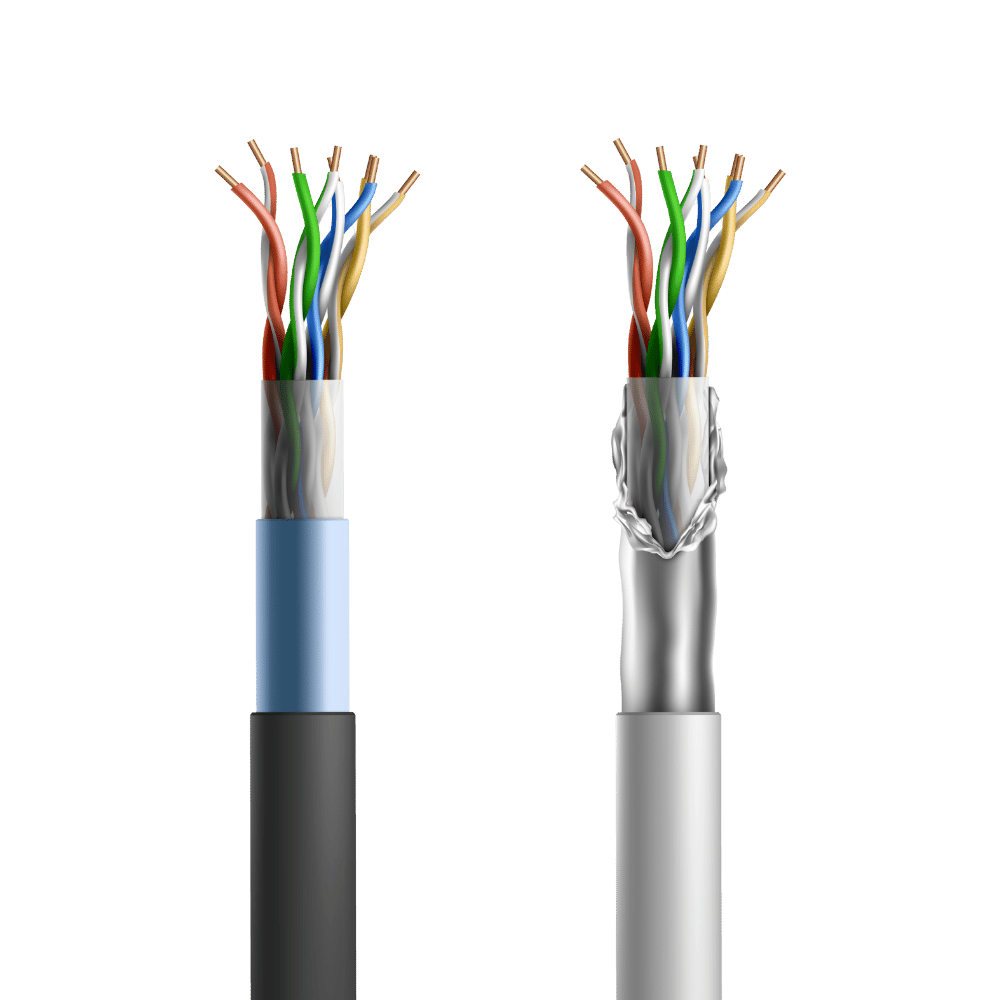
Cat6 vs Cat6A Ethernet Cable: What’s the Difference? 🌐
Cat6 vs Cat6A Ethernet Cable: What’s the Difference? 🌐
When setting up a network for CCTV, access control systems, IoT devices, or office systems, choosing the right Ethernet cable matters more than many people realise. Two of the most commonly compared options are Cat6 and Cat6A cables.
This article explains the differences between Cat6 and Cat6A in simple terms, and helps you decide which one is more suitable for your project.
What Is Cat6? 🔌
Cat6 (Category 6) is one of the most widely used Ethernet cables today.
Key specifications
- Supports speeds up to 1Gbps
- Maximum frequency of 250 MHz
- Recommended cable length up to 100 metres
Common uses
- Home and office networks
- Standard CCTV systems
- Access control and basic IoT devices
Advantages
- Cost-effective
- Easier to install
- Thinner and more flexible than Cat6A
What Is Cat6A⚡
Cat6A (Category 6 Augmented) is an enhanced version of Cat6, designed for higher performance and better stability.
Key specifications
- Supports speeds up to 10Gbps
- Maximum frequency of 500 MHz
- Recommended cable length up to 100 metres at 10Gbps
Common uses
- High-resolution CCTV (4K and above)
- PoE devices with higher power demand
- Data centres and commercial buildings
Advantages
- Higher bandwidth
- Better resistance to interference
- More future-proof
Cat6 vs Cat6A: Side-by-Side Comparison 📊
| Feature | Cat6 | Cat6A |
|---|---|---|
| Maximum Speed | 1Gbps | 10Gbps |
| Bandwidth | 250 MHz | 500 MHz |
| Cable Thickness | Thinner | Thicker |
| Interference Protection | Standard | Enhanced |
| Cost | Lower | Higher |
Which One Should You Choose? 🤔
Choose Cat6 if:
- You are setting up a home or small office network
- Your devices do not require extremely high data speeds
- Budget is a key concern
Choose Cat6A if:
- You are installing CCTV with high-resolution cameras
- You are using PoE switches with higher power output
- You want a more future-proof network infrastructure
Conclusion ✅
Ranger Automation is the best network LAN cable supplier in Malaysia, selling Cat6 and Cat6A cables. The cables are reliable and widely used. The right choice depends on your application, performance requirements, and long-term planning. You can also get a fiber-optic cable supplier in Malaysia from us!
For standard installations, Cat6 is usually sufficient. For larger systems, higher power devices, or long-term scalability, Cat6A offers better performance and peace of mind.
When in doubt, consult your system integrator to ensure your cabling matches your network and device requirements.